Podcast Radical Simple Living

Showing posts with label Comments about Quakers. Show all posts

Monday, October 7, 2013

My Quaker Past ~ " Jewish Mom"

 "My nine years at Friends School shaped me as a human being in many ways, and one of the most formative experiences of all was standing up week by week and sharing my own “inner light’ with my friends and classmates and teachers. And just yesterday it occurred to me out of the blue that there is a strong connection between those Meeting for Worship monologues of long ago (and my blog) today.
My mission for this website is that it will be a place where I can share my Inner Light with you .... And most of the time this website is just that, it’s a place where I share only those thoughts and experiences and insights that touch my heart most deeply.What I really want, what I’m really strive for, is to only open my mouth when I have something important to say. When I feel my inner light stirring within me, and I just have to open up my browser and start typing. And send some words straight from my Jewish Mom heart to yours."

More at  http://jewishmom.com/2012/07/15/my-quaker-past (Well worth reading the whole article ~ very moving.)


Friday, September 30, 2011

Hay Quaker ~ One Year On

The Hay Quaker Blog is one year old!

In that year 484 posts and 27,808 page views!

I would like to thank all of you that have been readers, regular or occasional, and all those who have given me encouragement with their comments. In particular I would like to thank all those who have provided links to this site from their own blogs and websites.

The blog is not just used by the Quakers and Unitarians who have provided most of the material but by Anglicans, Catholics, Mennonites, Methodists, Jews, Pagans, atheists and others. Thank you!

I love to exchange views with readers of Hay Quaker so, if you do not do so already, please follow me on one of the following. I will be pleased to welcome you! (Click to the links)


These are the five most popular posts from the year ~

Being Useful ~ Leo Tolstoy
Stare us in the Face ~ William Penn
Be Anything or Nothing ~ Susan B Anthony
Personal Revolution~ Laura Ingalls Wilder
To Live the Simple Life ~ Rufus M. Jones

And if I can add my own personal favorite to that list it would be ~
Escape Like Squirrels ~ D.H. Lawrence

As the blog is so large you may need to search for what you want. The search engine, provided by Blogger in the top left hand corner is of limited use, or try using Google search with the words of your search followed by "Hay Quaker".

Thank you all once again!


Tuesday, February 1, 2011

What William Cobbett thought of the Quakers

"The Quakers have been urging [the "infamous London press"] on, underhanded. They have, I understand, been bribing it pretty deeply, in order to culumniate me, and to favour their own monopoly; but, thank God, the cunning knaves have outwitted themselves. They wont play at cards; but they will play at Stocks; they will play at Lottery Tickets, and they will play at Mark-lane. They have played a silly game, this time. Saint Swithin, that good old Roman Catholic Saint, seemed to have set a trap for them: he went on wet, wet, wet, even until the harvest began. Then, after two or three day's sunshine, shocking wet again. The ground soaking, the wheat growing, and the'Friends;' the gentle Friends, seeking the Spirit, were as busy amongst the sacks at Mark-lane as the devil in a high wind. In short they bought away, with all the gain of Godliness, and a little more, before their eyes. All of a sudden, Saint Swithin took away his clouds; out came the sun; the wind got round to the East; just sun enough and just wind enough; and as the wheat ricks every where rose up, the long jaws of the Quakers dropped down; and their faces of slate became of a darker hue. That sect will certianly be punished, this year; and, let us hope, that such a change will take place any rate; for, at present, their sect is a perfect monster in society; a whole sect, not one man of whom earns his living by the sweat of his brow. Asect a great deal worse than the Jews; for some of them do work. However, God send us the eaterly wind, for another fortnight, and we shall certainly see some of this sect at work."

Thursday, December 2, 2010

Ralph Waldo Emerson on Quakers

"It is very interesting to me to see, as I do, all around me here, the essential doctrines of the Quakers revived, modified, stript of all that puritanism and sectarianism had heaped upon them, and made the foundation of an intellectual philosophy, that is illuminating the finest minds and reaches the wants of the least cultivated. The more I reflect upon the Quakers, the more I admire the early ones, and am surprised at their being so far in advance of their age, but they have educated the world till it is now able to go beyond those teachers."

Tuesday, November 30, 2010

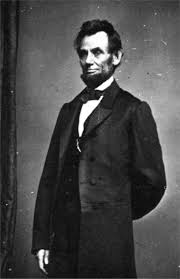
Abraham Lincoln and the Quakers

Quaker  Eliza Gurney wrote President Abraham Lincoln during the Civil War in 1883, saying,


"Many times, since I was privileged to have an interview with thee, nearly a year ago, my mind has turned towards thee with feelings of sincere and Christian interest, and, as our kind friend Isaac Newton offers to be the bearer of a paper messenger, I feel inclined to give thee the assurance of my continued hearty sympathy in all thy heavy burdens and responsibilities and to express, not only my own earnest prayers, but I believe the prayers of many thousands whose hearts thou has gladdened by thy... efforts "to burst the bands of wickedness, and let the oppressed go free" that the Almighty Ruler of the universe may strengthen thee to accomplish all the blessed purposes, which.. .1 do assuredly believe He did design to make thee instrumental in accomplishing, when He appointed thee thy present post of vast responsibility as the Chief Magistrate of this great nation.

                            Eltza Gurney", 1863
He replied:

"Your people—the Friends—have had and are having a very great trial. On principle, and faith, opposed to both war and oppression, they can only practically oppose oppression by war. In this hard dilemma some have chosen one horn and some the other. For those appealing to me on conscientious grounds, I have done, and shall do, the best I could and can, in my own conscience, under my oath to the law. That you believe this, I doubt not; and, believing it, I shall still receive, for our country and myself, your earnest prayers to our Father in Heaven.

Your sincere friend,
Abraham Lincoln."
More at      http://www2.gol.com/users/quakers/abraham_lincoln.htm


" Many of (Lincoln's) ancestors were Quakers, and he deeply sympathized with their religion. Like many Quakers, he experienced a sense of mysticism, the sense of direct communication with the unseen."


More at   http://en.wikipedia.org/wiki/Abraham_Lincoln#Religious_and_philosophical_beliefs

Monday, November 29, 2010

John Milton and the Quakers

Quaker, Thomas Ellwood, acquired a cottage in Chalfont St Giles as a refuge for John Milton. In London, the plague was a serious threat and, as a high profile supporter of the republican cause, Milton’s liberty was also at risk following the Restoration. It was during the short time that he lived here that he completed his epic poem Paradise Lost and was inspired (by a question from Ellwood) to begin Paradise Regained. The cottage was probably built in the late sixteenth century, and has an interesting history – it is now a museum, containing the first edition of Paradise Lost.


Thomas Ellwood may well have been a friend of Milton's but, Christopher Hill in his book Milton and the English Revolution (1977) suggests that Milton was not an enthusiast of Quaker ideas;

"I do not intend to suggest that Milton belonged to any ofthese groups, that he was a Leveller, a Ranter, a Muggletonian or an early [i.e. pre-pacifist] Quaker. But . . . .their ideas illuminatehis and may well have influenced him, both positively and negatively."

"By 1660 Milton would have criticized . . . Quakers, on these grounds: they ignored the world as it really is, in all its brutality: they were fundamentally unserious, as self-regarding as a modern 'hippie'."

"The picture of Milton subsiding into a genial and pacifist old age,in which all conflicts are mental only, is a piece of twentieth-century sentimentalism which the seventeenth century texts donot justify."


Saturday, November 27, 2010

What George Washington said about the Quakers

"Your principles and conduct are well known to me; and it is doing the people called Quakers no more than justice to say, that (except their declining to share with others the burden of the common defense) there is no denomination among us, who are more exemplary and useful citizens.
I assure you very explicitly, that in my opinion the conscientious scruples of all men should be treated with great delicacy and tenderness; and it is my wish and desire, that the laws may always be as extensively accommodated to them, as a due regard to the protection and essential interests of the nation may justify and permit."

Wednesday, November 24, 2010

What Benjamin Franklin had to say About Quakers

"My being many years in the Assembly. . . gave me frequent opportunities of seeing the embarrassment given them by their principle against war, whenever application was made to them, by order of the crown, to grant aids for military purposes. . . . The common mode at last was, to grant money under the phrase of its being "for the king's use," and never to inquire how it was applied."


More at  http://blog.plover.com/religion/
http://hystery.blogspot.com/2009/01/regarding-benjamin-franklin-quakers-and.html


Charles Dickens on Quakers

“I say again,” said my aunt, “nobody knows what that man’s mind is except myself; and he’s the most amenable and friendly creature in existence. If he likes to fly a kite sometimes, what of that? Franklin used to fly a kite. He was a Quaker, or something of that sort, if I am not mistaken. And a Quaker flying a kite is a much more ridiculous object than anybody else.”

From David Copperfield Chapter 14.


Franklin was, of course, not a Quaker see  

Tuesday, November 23, 2010

What Tom Paine had to say About Quakers

"The religion that approaches the nearest of all others to true deism, in the moral and benign part thereof, is that professed by the Quakers ... though I revere their philanthropy, I cannot help smiling at [their] conceit; ... if the taste of a Quaker [had] been consulted at the Creation, what a silent and drab-colored Creation it would have been! Not a flower would have blossomed its gaieties, nor a bird been permitted to sing."


(Tom Paine came from a Quaker Family in Norfolk)


Friday, November 19, 2010

John Wesley and the Quakers

"John Wesley discovered from his itinerant preaching that Quakers gave him a mixed reception - in much the same way that members of the Church of England did. There were some Quakers who listened to his preaching, believed the gospel and professed Christ for salvation. Wesley’s Journal has records of these happenings. At the same time there were other Quakers who strongly opposed Wesley’s ministry. Wesley had made a close study of the writings of Robert Barclay (1648-1690), the Scottish Quaker theologian and friend of George Fox. He charged Barclay with making sanctification the ground of our justification - the same error that’s found in Roman Catholic teaching - and that, as a consequence, Barclay was teaching justification by works and not by faith. But he also found sound doctrine in Barclay and adapted and used his work, An Apology for the true Christian Divinity when Wesley was refuting the doctrine of unconditional predestination. Wesley first published his edited version of Barclay’s anti-predestinarian arguments in 1741 under the title, Serious Considerations on Absolute Predestination: Extracted from a late Author."


More at  http://www.wesley-fellowship.org.uk/WesBulletin21_1.html

Wednesday, November 17, 2010

Quaker Persecution ~ Nathaniel Hawthorne

"WHEN his little audience next assembled round the chair, Grandfather gave them a doleful history of the Quaker persecution, which began in 1656, and raged for about three years in Massachusetts.

He told them how, in the first place, twelve of the converts of George Fox, the first Quaker in the world, had come over from England. They seemed to be impelled by an earnest love for the souls of men, and a pure desire to make known what they considered a revelation from Heaven. But the rulers looked upon them as plotting the downfall of all government and religion. They were banished from the colony. In a little while, however, not only the first twelve had returned, but a multitude of other Quakers had come to rebuke the rulers and to preach against the priests and steeple-houses.

Grandfather described the hatred and scorn with which these enthusiasts were received. They were thrown into dungeons; they were beaten with many stripes, women as well as men; they were driven forth into the wilderness, and left to the tender mercies of tender mercies of wild beasts and Indians. The children were amazed hear that the more the Quakers were scourged, and imprisoned, and banished, the more did the sect increase, both by the influx of strangers and by converts from among the Puritans, But Grandfather told them that God had put something into the soul of man, which always turned the cruelties of the persecutor to naught.

He went on to relate that, in 1659, two Quakers, named William Robinson and Marmaduke Stephen-son, were hanged at Boston. A woman had been sentenced to die with them, but was reprieved on condition of her leaving the colony. Her name was Mary Dyer. In the year 1660 she returned to Boston, although she knew death awaited her there; and, if Grandfather had been correctly informed, an incident had then taken place which connects her with our story. This Mary Dyer had entered the mint-master's dwelling, clothed in sackcloth and ashes, and seated herself in our great chair with a sort of dignity and state. Then she proceeded to deliver what she called a message from Heaven, but in the midst of it they dragged her to prison."


Friday, November 12, 2010

What Voltaire had to say about Quakers

"You have already heard that the Quakers date from Christ, who, according to them, was the first Quaker. Religion, say these, was corrupted a little after His death, and remained in that state of corruption about sixteen hundred years. But there were always a few Quakers concealed in the world, who carefully preserved the sacred fire, which was extinguished in all but themselves, until at last this light spread itself in England in 1642"


More at  http://www.bartleby.com/34/2/3.html

Tuesday, October 5, 2010

Quaker Schools; Bullying in 1940's ~ Shirley Williams


"When the war became serious in 1940, my parents decided I should be evacuated to a safer place - Swanage in Dorset. I spent a bit less than a year at a boarding school there. It was a very good Quaker School, but a fearful lot of bullying went on, and the teachers seemed completely unaware of it. They were upright people, and they probably thought children were nicer than they actually are. I didn't get bullied too much - I was more on the bullying side. When a school has a culture of bullying you have to decide whether to be tough or a victim. I chose to be a bit of a bully."


Read more: 
http://www.dailymail.co.uk/femail/article-1255114/Me-school-photo-Shirley-Williams.html#ixzz11U43Pj2D

Quaker Schools the Stranger in our Midst - John Dunston

"And what do Quaker schools have to say about the stranger in our midst? Indeed, what does it mean when a school calls itself Quaker? We all know the importance of signs and symbols. Most religions have a generous helping of such things, aids to worship perhaps, or to communicating with God, or to expressing the inexpressible. That, I suppose, is already one area where Jews and Quakers would understand each other particularly well, since their places of worship – the synagogue and the meeting house – are invariably devoid of any form of representation of the divine."
More at:  http://www.quakers-in-ireland.ie/home/archives/867


More about Leighton Park School (which I taught at for some years ~ HayQuaker) at: http://www.leightonpark.com/


Click (below) and Discover

~ Ron Franscell A.E. Housman Adrian Fisher Advices and Queries Ageing Agnes L. Tierney Albert E. Day Aldo Leopold Aleksandr Solzhenitsyn Alexie Torres-Fleming Alice Reinheimer Alice Stokes Paul Alice Walker Alone Amish André Kostelanetz Andrew Cohen Animals Ann Barnes Ann Preston Anna Sewell Anthony T. Hincks Antoine de Saint-Exupéry Arnold Bennett Arnold Mitchell Art Arthur Gish Arthur Miller Ashley Wilcox Autumn Baltimore Yearly Meeting Basil the Great Ben Pink Dandelion Benjamin Franklin Benjamin Spock Bernard Canter Bernard of Clairvaux Betty Friedan Bhagwan Shree Rajneesh Bill McKibben Bill Mollison Bob Dylan Bob Marley Boris Pasternak Britain Yearly Meeting Bruce Arnold Bruderhof C.S. Lewis Caitriona Reed Carl Honoré Carol Deppe Carol Holst Caroline Stephen Celtic Wisdom Charles Dudley Warner Charles E. Kellogg Charles H. Spurgeon Charlie Chaplin Charlotte Brontë Chellie Pingree Children Ching Ning Chu Christina Rossetti Christopher Bamford Christopher Morley Claudio Oliver Comments about Quakers Community Conflict Contemplative Scholar Corita Kent Craig Barnett Craig Jensen Creation Creativity D H Lawrence D. H. Lawrence Dag Hammarskjold Daniel Stulac Daniele Varè David Attenborough David J. Clark Dean Ornish Death Dennis Kucinich Derek Walcott Desmond Tutu Dinah Craik Dinah Maria Mulock Craik Diversity Donald B. Kraybill Donald Soper Donna Tartt Dora Willson Doris Lessing Dorothy L. Sayers Dorothy Law Nolte Dostoyevsky Douglas V. Steere Duane S. Elgin E. B. White E. F. Schumacher E. Nesbit E.F. Schumacher E.F. Schumacher. Green wisdom Eberhard Arnold Ed Begley Jr Edna St. Vincent Millay Education Edward Abbey Edward Bulwer-Lytton Edwin Way Teale Elise Boulding Elizabeth Bathurst Elizabeth Berg Elizabeth Fry Elizabeth Goudge Elizabeth Kubler-Ross Elizabeth Marshall Thomas Elizabeth Watson Ellen M. Ross Elsie Boulding Emil Fuchs Emily Greene Balch Eugene O'Neill Eve Balfour Evelyn Sturge Evelyn Underhill F. Scott Fitzgerald Faith Faith Baldwin Fall Family Life Family lLife Farming Faults Fear Food Forgiveness Forgivingness Francis Brown Francis de Sales Francis Howgill Frank Zappa Franz Winkler Frederick Parker-Rhodes Freedom Friendship Frugality Fyodor Dostoyevsky G. K. Chesterton Gardening Garrison Keillor Gary Snyder Geen Wisdom Gene Logsdon Geoffrey Durham George Amoss Jr George Bernard Shaw George Fox Gerard Manley Hopkins Gert Giovanni Boccaccio Goethe Grace Blindell Gratitude Green Green Wisdom Growing Grace Farm Gustave Flaubert H.G. Wells Hal Borland Hamlin Garland Hannah Heinzekehr Harriet Beecher Stowe Haruki Murakami Harvey Gillman Hay Quaker Health Helen Fox Helen Nearing Henri Frederic Amiel Henri Nouwen Henri-Frédéric Amiel Henry David Thoreau Henry T. Hodgkin Henry Van Dyke Henry Wadsworth Longfellow Henry Ward Beecher Herb Walters Herman Melville Hermann Hesse Hilda Clark Home Hope Horace B Pointing Howard H. Brinton Humility. Iris Graville Iris Murdoch Isaac Newton Isaac Penington Isabel Allende Islamic Wisdom J. Field J.D. Belanger Jack Kornfield James D. Wilson James Fenimore Cooper James Fennimore Cooper James Nayler James Parnell James Riemermann James Thurber Jan Struther Jana Llewellyn Jane Addams Jane Austen Jane Goodall Janet Scott Jean Toomer Jean Webster Jeanne Roy Jennifer Kavanagh Jenny Spinks Jewish Wisdom Jimmy Carter Joel Salatin Johann Christoph Arnold John Dear John Donne John Dunston John Everard John Field John Fowles John Greenleaf Whittier John Howard Yoder John Lubbock John Milton John Muir John Nicholson John O'Donohue John of Ruysbroeck John Patrick Shanley John Robbins John Ruskin John Seymour John Steinbeck John W Rountree John William Grahamuaker Wisdom John Wood John Woolman Jon Krakauer Jonathan Edwards Joni Mitchell Josef Pieper Joseph Brackett Joseph Campbell Joseph Conrad Joshua Loth Liebman Joy Joy Clarkson Kallistos Ware Kathryn Damiano Keith Stewart Kenneth Boulding Kenneth Grahame Kent Nerburn Kristen Boye Kristin Kimball L. Frank Baum L.M. Montgomery Larry McMurtry Laura Ingalls Wilder Leila Lees Leo Tolstoy Leonard Cohen Leonardo da Vinci Lewis Carroll Leymah Gbowee Little Falls Friends Lois Rock Lorna M. Marsden Lorraine Anderson Louisa May Alcott Louise Dickinson Rich Love Lucy Maud Montgomery M. Scott Peck Madeleine L'Engle Marcus Aurelius Margaret Fell Margaret Mead Marie Curie Mariellen O. Gilpin Mark Birch Mark Boyle Mary J. Tabor Masanobu Fukuoka Matt Kinsi Matthew Landis Max Carter May Sarton Maya Angelou Meister Eckhart Melancholy Jane Mennonite Mennonite Wisdom Michael Pollan Michel de Montaigne Mildred Tonge Miriam Toews Mohammed Faris Monica Muhammad Ali Naomi King Natalie Goldberg Nathaniel Hawthorne Nature Neil Young Nicolas Gallicus Nikos Kazantzakis Nilton Bonder Non-violence. Nonconformity Norma Jacob Norman Wirzba Oliver Cromwell Oscar Wilde Pamela Haines Parenting Parker J. Palmer Paul A. Lacey Paul Lacey Paul Newman Paulo Coelho Peace Peace. Pearl S. Buck Pete Dunne Philip Britts Pierre Teilhard de Chardin Piet Hein Plainness Pleasure Poetry Poetry. Prayer Primo Levi Prison Quaker action Quaker history Quaker Lives Quaker Scientists Quaker views Quaker Wisdom Quaker Women Quiet Rachel Carson Rachel Sontag Rainer Maria Rilke Ray Bradbury Ray Lovegrove Rebecca James Hecking Redeeming the Dirt Renewal Rhoda Janzen Richard J Foster Richard P. Feynman Richard Proenneke Richard Scatchard Robert Barclay Robert Browning Robert Burns Robert E. Lee Robert E. Reuman Robert Griswold Robert Hart Robert Louis Stevenson Robert Maynard Hutchins Robertson Davies Roger Bartlett Roger Scruton Rudy Henry Wiebe Rufus Jones Rufus M. Jones Sean Stewart. Seasons Self-sufficiency Shakers Shirley Williams Silence Simon Heywood Simplicity Slavery Slow Sm Keen Soil Solitude Stephen Batchelor Stephen Crisp Stephen Jay Gould Sterling Olmstead Sue Bender Susan B. Anthony Susanne Kromberg Sustainability Sylvia Townsend Warner T.H.White Teresa of Avila The Jones Family The Northumbria Community The Quaker Dharma The Quaker Scholar Thomas A' Kempis Thomas Clarkson Thomas de Quincey Thomas Kelly Thomas Moore Thomas More Thomas R. Kelly Thomas Traherne Thornton Wilder Time Tom Walsh Tove Jansson Trust Truth U.A. Fanthorpe Ubantu Unitarian Wisdom Universal Wisdom Universal; wisdom Ursula Franklin Vegetarian Wisdom Veronica Nicholson Victor Hugo Victoria Pearson Virginia Shurman Virginia Woolf W Ross Chapman Walt Whitman Walter James War Warren E. Burger Wealth Wee Dragon Wendell Berry Will Bonsall Willa Cather William Blake William Charles Braithwaite William George Jordan William H. Sessions William Henry Channing William Law William Leddra William Penn William Wordsworth Willis D. Nutting Winter Wisdom Wolf Mendl Work Worship